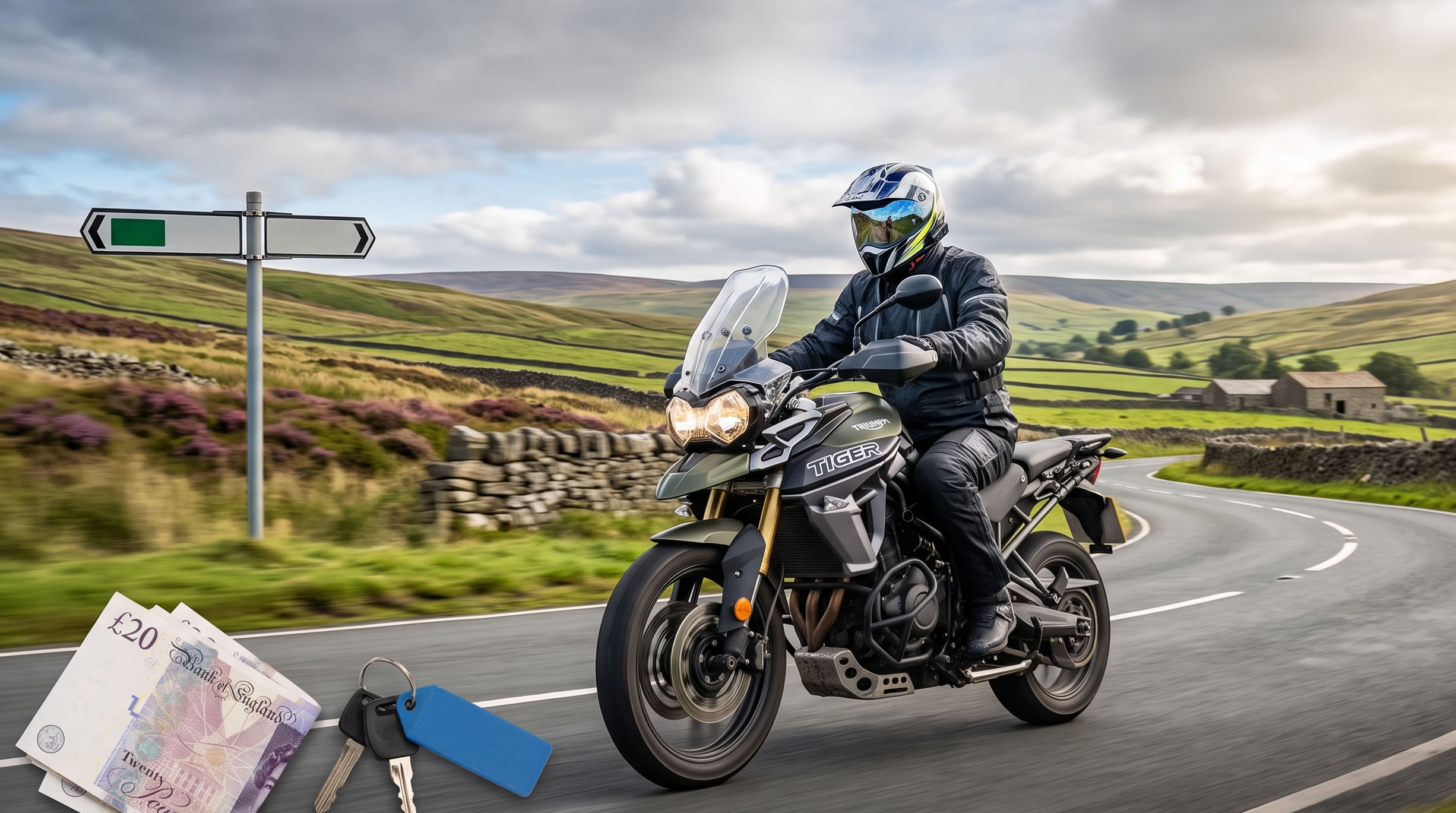
It's one of the most common things riders in the UK wrestle with — and the answer is rarely straightforward.
In this guide, we look at how long UK motorcyclists typically keep their bikes before trading in or selling, what factors influence that decision, how depreciation works in practice, and when the right moment to part-exchange actually is. If you're riding in Derbyshire, Nottingham, Derby, Leicester, Sheffield, or anywhere across the Midlands and North, this is what you need to know.
There's no single official dataset that tracks exactly how long UK motorcyclists hold onto their bikes before trading in, but industry data, DVLA registration figures, and dealer insight paint a fairly consistent picture.
The average UK motorcyclist keeps their bike for around 2 to 4 years before selling, trading in, or upgrading. That said, the range is wide. Some riders swap every 12 to 18 months; others hold onto a bike for 10 years or more. The median sits closer to two to three years for privately registered used bikes, and slightly longer for those bought from dealerships with finance arrangements in place.
For context, the average car ownership period in the UK is approximately 3.5 years. Motorcycles tend to turn over slightly faster, particularly in the beginner and commuter segments, where lifestyle changes and evolving riding needs drive relatively quick transitions.
It's also worth noting that the UK's motorcycle market leans heavily used. Around 70–75% of motorcycle transactions in the UK involve second-hand bikes, which means the trade-in and resale cycle is active, well-supported, and worth understanding whether you're buying or selling.
How Long You Keep Your Bike Depends on the Type of Rider You Are
Ownership period varies significantly depending on why you ride and how you ride. Here's a breakdown by rider profile.
New and Learner Riders
New riders — particularly those on A1 licence restrictions or who've just passed their full test — are the fastest movers in the market. The typical ownership period for a first motorcycle is 12 to 24 months, sometimes less.
This makes complete sense. A first bike is often chosen based on what you can legally ride rather than what you'd ideally want. Once a rider gains experience, confidence, and unrestricted licence access, the appeal of something bigger, faster, or better-suited to their riding style tends to take over quickly.
Popular first bikes — the Honda CB125R, Kawasaki Z400, Yamaha MT-03 — are bought and sold frequently, which keeps residuals relatively strong in the used market for these models. Demand from new riders remains consistent year-round.
Commuters
Motorcycle commuters in the UK tend to keep their bikes for around 2 to 3 years. Commuter bikes accumulate mileage faster than leisure bikes and see year-round use in often-punishing British weather conditions, which accelerates wear and brings servicing costs forward.
Many commuters trade in before their bike hits a high-cost service interval or before they need to replace consumables like tyres, chains, and brakes, which can represent meaningful outlay on a high-mileage machine. This is a pragmatic financial decision as much as a desire for something new.
Weekend and Leisure Riders
Weekend riders accumulate mileage more slowly and tend to keep bikes for 3 to 5 years on average. The emotional connection to the bike often plays a bigger role here — the bike is a source of enjoyment rather than a tool, so the calculus involves more than just cost per mile.
That said, the itch for something new is real, and the used bike market in the UK gives leisure riders regular opportunities to upgrade. Many in this group are serial upgraders who follow a predictable cycle: buy, ride for two to four seasons, trade in, repeat.
Touring and Adventure Riders
Adventure and touring riders — those on bikes like the BMW GS series, Triumph Tiger, Yamaha Ténéré, or Honda Africa Twin — tend to keep their bikes longer than average. 4 to 7 years is not unusual, with some riders logging 60,000 to 80,000 miles on a single machine before moving on.
These bikes are expensive to buy new, and riders in this segment are often more mechanical and more invested in making their machine work well for them over the long term. A well-set-up adventure bike with the right luggage, screens, and accessories can take years to get exactly right — and once it's dialled in, there's often little incentive to start again from scratch.
Collectors and Enthusiasts
At the other end of the spectrum, serious enthusiasts and collectors may keep specific machines indefinitely. A classic British twin, a significant Japanese four, or a rare Italian sportsbike can appreciate over time rather than depreciate, fundamentally changing the ownership economics.
Many in this group own multiple bikes simultaneously — a daily rider, a weekend bike, and one or more classics — and rarely trade in the bikes that matter to them. For these riders, the concept of "when to trade in" simply doesn't apply in the same way.
Does the Type of Motorcycle Affect How Long People Keep It?
Yes — significantly. The category of bike has a direct effect on typical ownership periods, largely driven by depreciation rates, running costs, and the pace at which technology or fashion moves in each segment.
Sportsbikes, particularly new-model flagship machines, carry some of the steepest depreciation in the motorcycle market. A brand-new litre-class superbike can shed 25–35% of its value in the first year, which is one reason many experienced riders buy two or three years old rather than new in this category. Owners of new sportsbikes often move on quickly to limit their depreciation exposure.
Cruisers and customs — particularly Harley-Davidson, Indian, and quality Japanese cruisers — hold value comparatively well, partly because riders in this segment often invest heavily in customisation, which increases their emotional attachment and reduces the desire to move on quickly.
Motorcycle Depreciation in the UK: What the Numbers Actually Look Like
Understanding depreciation is central to knowing when to trade in. Unlike cars, motorcycles don't have a single universally-applied depreciation model, but broad patterns are well-established in the UK market.
New Motorcycles
A brand-new motorcycle in the UK will typically lose 20 to 30% of its purchase price in the first 12 months. By year two, annual depreciation slows to roughly 10 to 15%. By year three to five, the rate slows further, often to 5 to 10% per year — assuming the bike is well-maintained and has reasonable mileage.
This means the steepest financial hit from depreciation happens in the first year. Buyers who purchase new and sell after 12 months take the worst of it. Those who wait until year two or three before trading in have already survived the sharpest drop.
Used Motorcycles
Used bikes bought from dealerships in the 1 to 3 year age band are past the worst depreciation cliff. They depreciate more gently, making them easier to hold for longer without losing large sums of money.
Mileage and Condition
In the UK market, condition often matters more than mileage alone. A well-maintained motorcycle with full service history, clean bodywork, and good tyres will hold its value considerably better than a low-mileage machine that's been neglected, sat unused, or shows signs of accident damage. Dealers and private buyers alike pay close attention to condition when valuing bikes for trade-in or purchase.
When Is the Right Time to Trade In Your Motorcycle?
There's no universal right answer, but there are several clear signals that the time to trade in is approaching — and some financial sweet spots worth targeting.
Before a Major Service Interval
Motorcycles have scheduled major service intervals — often at 12,000, 18,000, or 24,000 miles depending on the model — that can involve significant cost. Valve clearances, timing chain inspections, coolant changes, and brake fluid replacement are common items at these milestones, and the bill can easily run to several hundred pounds at a franchise dealer.
Trading in before hitting a major service interval means those costs fall to the incoming buyer rather than to you. It's worth checking your service schedule and planning your trade-in timing accordingly.
Before Tyres or Consumables Are Due
A new set of motorcycle tyres in the UK can cost anywhere from £150 to £400 fitted, depending on the size and brand. If your bike is approaching a tyre change and you're already thinking about upgrading, it's often more cost-effective to trade in and let the dealer sort the rubber.
After Two to Three Years of Ownership
For most riders buying a used bike in the 1 to 3 year age bracket, the sweet spot for resale tends to be after two to three years of ownership. By this point, the bike has depreciated gently rather than sharply, and is still young enough to attract strong interest from the next buyer without requiring significant investment to make it presentable.
When Your Riding Needs Have Changed
This is the most honest reason most UK riders trade in when they do. Life changes — commuting routes change, families grow, adventure ambitions develop, or the daily rider becomes a weekend-only machine. A bike that doesn't fit your actual riding life will always feel like a compromise, and there's rarely a strong argument for keeping it.
The Best Time of Year to Trade In a Motorcycle in the UK
Timing your trade-in to the seasons genuinely matters in the UK. Motorcycle demand follows a predictable seasonal pattern, and trading in at the right time of year can have a meaningful effect on the valuation you receive.
February to April: Peak Trade-In Season
Late winter to early spring is the strongest period to trade in a motorcycle in the UK. Buyer demand starts to build as the riding season approaches, dealers are actively buying stock ahead of their busiest retail months, and valuations tend to reflect that demand. If you're thinking about a trade-in, February, March, and April are your best window.
May to July: Strong Market, Good Options
The market remains active through early summer. Dealers will have moved their spring stock and are looking to replenish for the remaining riding season. This is still a good time to trade in, though you may have slightly less leverage than in early spring.
August to October: Declining Demand
As autumn approaches and riding hours shorten, demand starts to soften. Trade-in valuations can dip as dealers become more cautious about stock they'll need to hold over winter. This isn't a terrible time to trade in — dealerships still buy and sell year-round — but you may find the process marginally less favourable than spring.
November to January: Winter Slowdown
Midwinter is the quietest period for UK motorcycle sales, and trade-in valuations often reflect this. Unless you have a specific reason to move your bike in winter — for example, you're buying a bike that's available at an exceptional price — it's generally worth waiting until late January at the earliest, with February onward being preferable.
Part Exchange vs Private Sale: Which Gets You More?
This is a question every rider faces when deciding how to exit a bike. The honest answer is that a private sale will usually achieve a higher headline price — but it comes with significant caveats.
Private Sale: Higher Price, More Work
Selling privately via AutoTrader, Facebook Marketplace, or specialist forums can yield 10 to 15% more than a dealer trade-in in favourable conditions. However, a private sale involves photography, advertising costs, fielding enquiries (many of which will come to nothing), arranging viewings, test rides, payment security, and the legal transfer of ownership. Time-wasters, lowballers, and no-shows are a consistent feature of the private motorcycle market.
There's also the safety consideration. Arranging viewings and test rides with strangers carries risks — both personal safety risks and the practical risk of handing your bike to someone with unknown riding ability. Incidents during test rides on a privately sold motorcycle can have complicated insurance implications.
Part Exchange: Less Hassle, Immediate Resolution
Part-exchanging at a reputable dealership resolves all of these issues. The valuation is clear, the transaction is straightforward, there's no waiting around, and the value rolls directly into your next purchase. For most UK riders, particularly those buying their next bike from the same dealer, part exchange is the cleaner and less stressful route.
The price difference between a strong dealer part-exchange offer and a private sale is often smaller than people expect — particularly if the dealer is motivated to do a deal on the bike you're buying. A well-prepared bike brought in at the right time of year to a dealer who wants your specific model in stock can achieve a trade-in valuation that compares very favourably to private sale prices.
Signs It's Time to Move On From Your Current Bike
Sometimes the right time to trade in isn't about market conditions or financial planning — it's about how you feel about the bike you're on. Here are some reliable signals that it might be time to move on.
You're Riding It Less
If a bike is sitting in the garage more than it's out on the road — not because of weather or season, but because you're not particularly motivated to ride it — that's a meaningful signal. The best bike is always one you actually want to ride.
Running Costs Are Getting Uncomfortable
As bikes age and accumulate mileage, running costs tend to increase. If you're finding that service bills, tyre costs, and small repairs are adding up in a way that's no longer comfortable, it's worth doing the maths on whether trading in and moving to a newer machine with lower running costs makes financial sense.
Your Riding Has Evolved Beyond the Bike
Riders improve. A bike that felt exciting and capable two years ago may now feel under-powered, under-specced, or simply not well-suited to how your riding has developed. This is a healthy sign of progression, not dissatisfaction, and it's one of the most legitimate reasons to trade in.
You've Started Looking at Other Bikes
If you've started regularly browsing used bike listings, researching models, or checking what your current bike would realistically achieve on part exchange — you've already made the decision, even if you haven't fully admitted it yet.
A Big Repair Is Looming
If your bike needs significant work — a new chain and sprocket set, brake discs, suspension overhaul, or anything with a large parts-and-labour bill attached — this is often the moment to evaluate whether investing that money into the current machine makes more sense than putting it toward the next one. In many cases, the answer is the latter.
How to Maximise Your Trade-In Value Before Handing Over the Keys
Regardless of when you choose to trade in, arriving well-prepared makes a difference. Dealers will always value a well-presented, well-documented motorcycle more favourably than one that arrives looking unloved.
Get Your Service History in Order
A full service history is one of the most significant factors in a used motorcycle's valuation. Gather every service record, MOT certificate, and receipt you can find. If there are gaps in the paperwork, honest disclosure is better than trying to conceal them — experienced dealers will spot missing stamps and make their own assumptions, which rarely favours you.
Present the Bike at Its Best
Clean the bike thoroughly before bringing it in for valuation. A detailed clean — including the chain, engine casings, wheels, and plastics — takes a few hours and costs almost nothing, but makes a material difference in how a valuer perceives the level of care the bike has received. First impressions matter.
Fix Small, Cheap Issues
A cracked mirror, a blown indicator bulb, scuffed bar-end, or a worn rear tyre will all be noted during an inspection and factored into the offer. Some of these are worth fixing before presenting the bike; others are better left to the dealer. As a rule of thumb, if something can be fixed for £30 or less and takes minimal time, fix it. If it requires specialist work, leave it and expect the offer to reflect it.
Be Honest About the Bike's History
Any accident damage, previous repairs, or known issues should be disclosed upfront. Attempting to conceal significant history from a dealer is both futile and counterproductive — experienced buyers will identify it, and it damages trust at exactly the point when you want goodwill in the negotiation.
Know the Realistic Market Value
Check what comparable bikes are currently listed for on AutoTrader and dealer websites before arriving for your valuation. Understanding the market means you can engage with a dealer offer from an informed position, and it sets realistic expectations on both sides.
Frequently Asked Questions
How long do motorcyclists keep their bikes in the UK on average?
Most UK motorcyclists keep their bikes for between 2 and 4 years before trading in or selling. Commuters and newer riders tend to move on sooner, while enthusiasts and touring riders often keep bikes for 5 years or more.
When is the best time to trade in a motorcycle in the UK?
Late winter to early spring — February to April — is widely considered the best time to trade in a motorcycle in the UK. Demand from buyers increases as riding season approaches, which supports stronger trade-in valuations.
How quickly does a motorcycle depreciate in the UK?
A new motorcycle typically loses around 20 to 30% of its value in the first year alone. By years two and three, depreciation slows considerably. Used bikes depreciate more gradually, making them better value for buyers and easier to sell without large losses.
Is it better to part-exchange or sell privately in the UK?
Part-exchanging at a dealership is quicker, simpler, and avoids the hassle of dealing with private buyers. You may get slightly less than a private sale in headline terms, but the convenience, security, and ability to roll the value into your next bike often makes it the better choice for most riders.
Does high mileage affect trade-in value for motorcycles in the UK?
Yes, mileage affects trade-in value, but condition and service history matter just as much. A well-maintained, higher-mileage motorcycle can fetch a better price than a neglected low-mileage one.
Should I sell my motorcycle privately or trade it in at a dealership?
Both routes have merit depending on your priorities. If maximising sale price is the primary goal and you have time, patience, and comfort with private sales, selling privately can achieve more. If speed, simplicity, and certainty matter more, part exchange at a trusted dealership is usually the better route.
What reduces a motorcycle's trade-in value the most?
Accident damage, incomplete service history, excessive wear on consumables (tyres, chain, brakes), and poor overall condition are the biggest factors that reduce trade-in value. Keeping your bike well-serviced and presentable protects its worth at every stage of ownership.
Final Thoughts
There's no single correct answer to how long you should keep a motorcycle before trading in — it depends on who you are as a rider, what you're riding, and what you're riding it for. The average UK motorcyclist lands somewhere between two and four years, but the right time for you is whenever the bike stops fitting your life as well as it once did.
What does matter is being informed when that moment arrives. Understanding depreciation curves, knowing the seasonal rhythms of the market, presenting your bike in its best condition, and working with a dealer you trust will all help you get the most from a trade-in and set you up well for whatever comes next.
If you're weighing up a trade-in now or thinking about it in the months ahead, Mallory Motorcycles is here to help. Talk to us about your bike, have a look at what we've got in stock, and let's find you something worth riding.